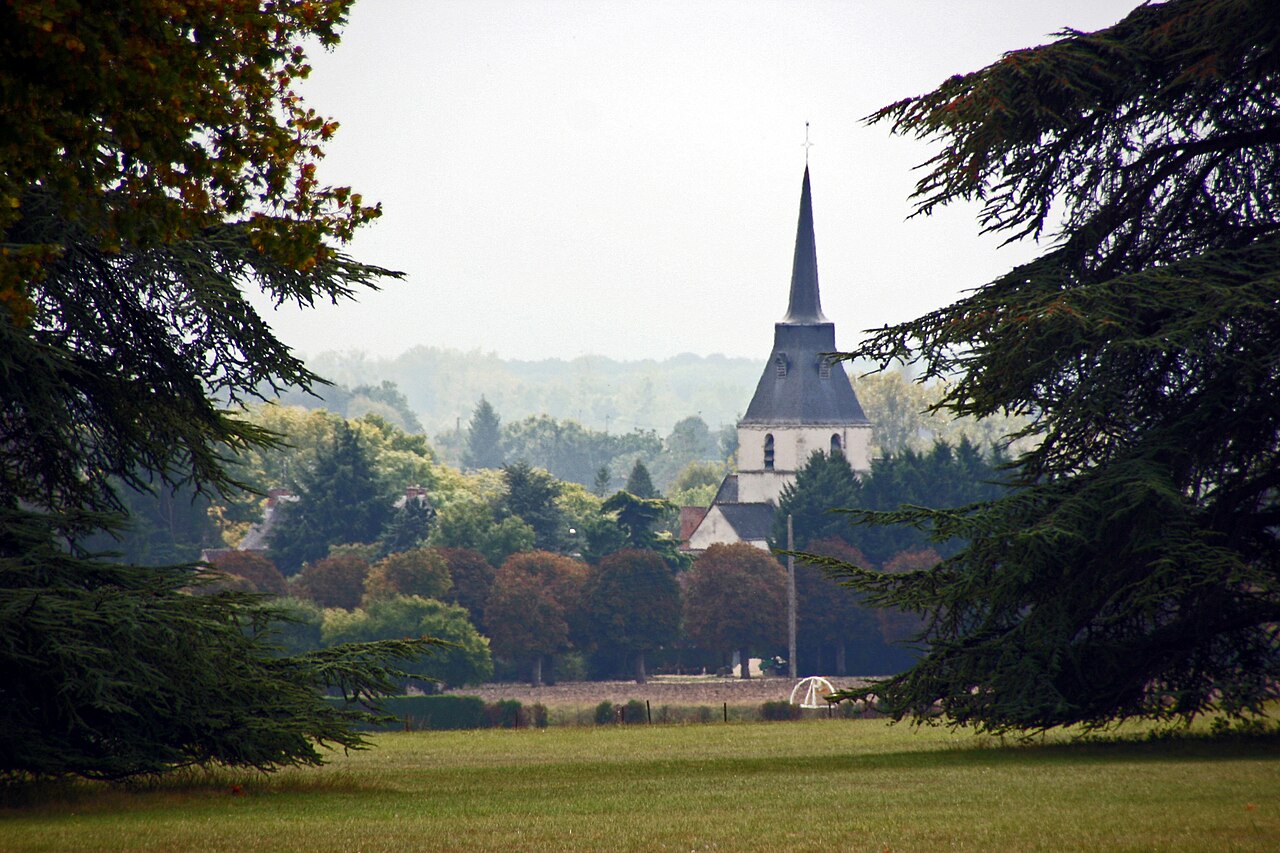
An intimate château, the crowd-free choice par excellence
If Chambord and Chenonceau have worn you out a little with their streams of visitors, Beauregard will be a breath of fresh air. Nestled in a wooded park south of Blois, this human-scale château is discovered in peace, far from the tour coaches. Built in the sixteenth century as a hunting lodge, then remodelled, it has kept the feel of a lived-in home rather than a monument. You wander without jostling, take your time, listen to the silence of the rooms. It is exactly the kind of place I recommend to guests in search of authenticity, or a little tired of the big sites. Here, the luxury is space and quiet. A precious pause in the middle of a busy trip.
The Gallery of Illustrious Figures: 327 historical portraits
Beauregard’s treasure is its Gallery of Illustrious Figures, and it is unique in Europe. Along the walls of a long room are arranged 327 painted portraits, depicting the great figures who shaped the history of France and Europe across more than two centuries: kings, queens, popes, emperors, navigators, ministers. This gallery, commissioned in the seventeenth century by Paul Ardier, a former treasurer, reads like a genuine illustrated encyclopaedia of power, conceived long before the invention of the modern history book. Each sovereign is set within their dynasty, beneath the portrait of the pope and emperor of their time. You stand amazed at the scale of it. Take time to spot the famous faces: it is a thrilling treasure hunt for young and old alike.
A floor of Delft faience, beneath your feet
Raise your eyes to the portraits, then lower them to the floor: the Gallery of Illustrious Figures holds a second surprise. The original paving is made up of thousands of blue Delft faience tiles, depicting an army on the march, cavalry and foot soldiers deployed as on a miniature battlefield. This precious and fragile work, laid in the seventeenth century, is one of the rare examples of its kind preserved in France. Walking above this silent parade, beneath the gaze of three centuries of monarchs, gives the room a particular solemnity. It is the kind of detail you would never suspect, and it makes the difference between a visit and a memory. Lovers of antique ceramics find rare joy here.
The Cabinet of Bells, a Renaissance jewel
Before the gallery, do not miss the Cabinet of Bells, one of the loveliest Renaissance rooms to be seen anywhere in the region. This small study takes its name from the décor of golden bells that adorns its painted panelling, echoing the arms of Jean du Thier, secretary of state to Henri II and builder of the Renaissance château in the sixteenth century. The coffered ceiling, the finely worked woodwork and the preserved colours form a setting of rare intimacy. It is easy to imagine the master of the house reading here or attending to his affairs, sheltered from the world. The exceptional preservation of this décor, almost intact after five centuries, makes it a precious witness to the refinement of the early French Renaissance. A tiny room, but unforgettable.
The Garden of Portraits and the wooded park
Outside, the estate extends the pleasure of the visit. The Garden of Portraits, created by a contemporary landscape designer, unfolds a series of green rooms in vivid colours, conceived as a living echo of the gallery indoors: each “room” of flowers evokes a tone, a mood. Beyond it, a vast landscaped park planted with century-old trees invites a stroll in the shade of oaks and cedars. The quiet paths, the carefully framed vistas and a pond compose a restful setting, perfect for catching your breath after the intensity of the gallery. It is an estate where you love to wander aimlessly, let the children run, and savour the coolness of the undergrowth on fine days.
Why Beauregard stays under the radar (and why that is a good thing)
Beauregard suffers from a paradox: it holds a gallery unique in the world, yet remains overshadowed by its prestigious neighbours. Too discreet to top the guidebooks, too rich to be a mere footnote, it occupies a place all its own. For the discerning traveller, this is a windfall. You gain access to first-rate heritage without the crush, at a reasonable price, in an almost confidential atmosphere. I have got into the habit of slipping it into my guests’ itineraries as a reward, a gem few of their friends will have seen. Let us hope it keeps this faintly secret charm for a long while yet. In the meantime, make the most of it: this kind of tranquillity, in the Loire Valley, is becoming rare.
Planning your visit: duration and the best times
Beauregard is comfortably visited in an hour and a half to two hours, gallery, Cabinet of Bells, apartments and gardens included. It is an ideal length to round off a day without feeling rushed. The château opens seasonally, generally from spring to autumn, sometimes with winter closures: check the times on the official website before setting off. Late morning or mid-afternoon are pleasant slots, the light showing off the gallery and the Garden of Portraits to advantage. Consider pairing Beauregard with another nearby site to make the most of the journey: with Cheverny so close, you have a perfect duo of grand inhabited château and intimate gem.
Getting to Beauregard from Meung-sur-Loire
From La Maison du Château, Beauregard is reached in about 45 minutes by road, towards the south of Blois, by way of the Cher bank and the Blois countryside. The estate has parking nearby. Its location, a few kilometres from Cheverny and Chambord, makes it an ideal complement to a day given over to those great châteaux: you alternate royal grandeur and the intimacy of a Renaissance study. For my guests keen to leave the beaten track, I gladly suggest starting with the major sites in the morning, then finishing gently at Beauregard in the afternoon. The contrast is striking, and you leave the Loire Valley feeling you have uncovered one of its secrets.
Beauregard is proof that the Loire Valley still hides confidential treasures: 327 portraits, a floor of Delft faience, an intact Renaissance study, and not the slightest crowd. From La Maison du Château in Meung-sur-Loire, 45 minutes are enough to treat yourself to this gem, ideal as a complement to a day at Cheverny or Chambord.