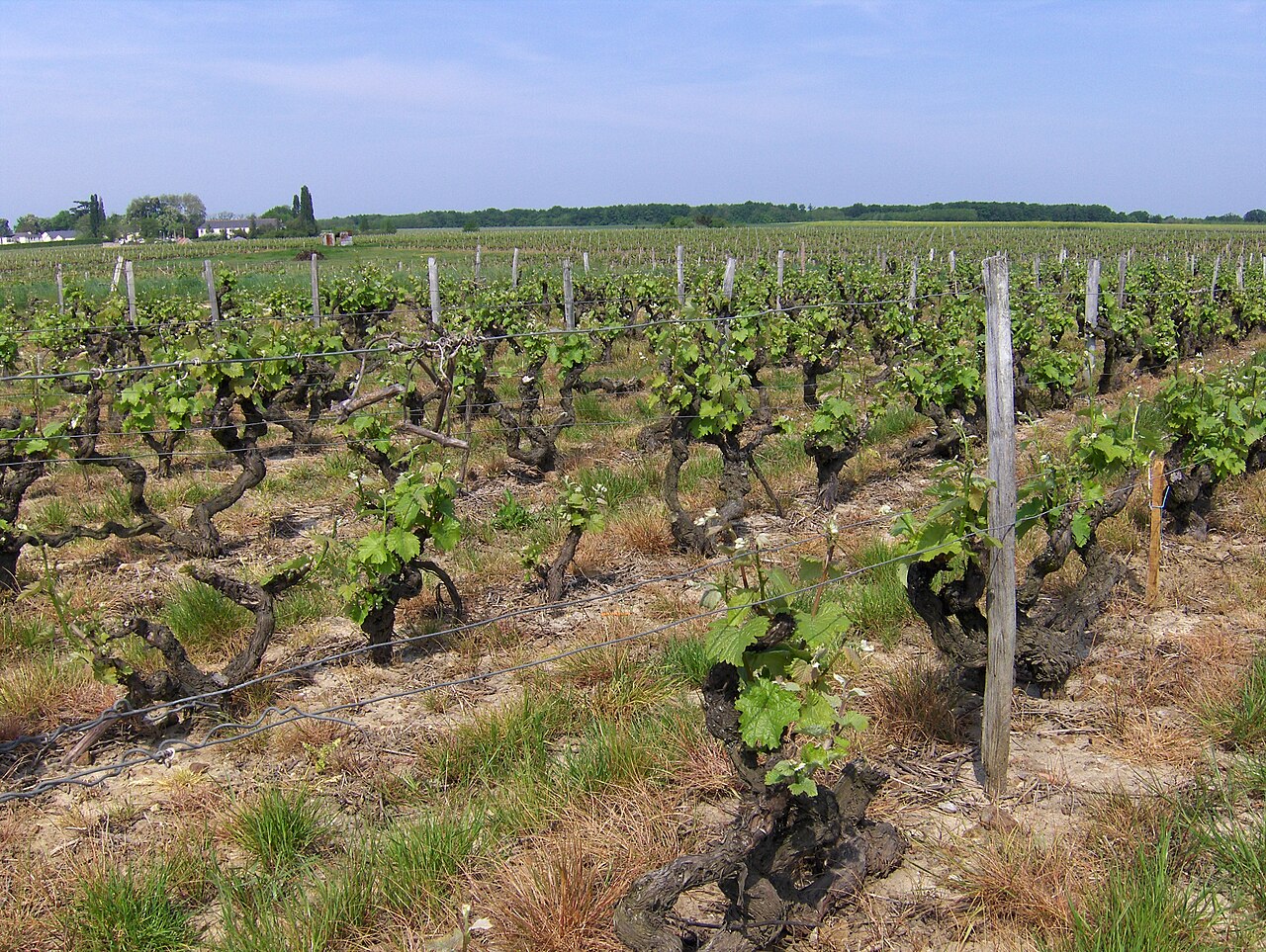
Vouvray, chenin in every guise
Vouvray is the Loire's chameleon appellation: a single grape, chenin blanc — known here as "pineau de la Loire" — turned into almost every shade of white. Depending on the sunshine of the vintage and the grower's choice, the same grape gives a still wine that is dry, off-dry, sweet or lusciously sweet, but also, above all, a sparkling or "fine bubbles". AOC since 1936, the vineyard spreads over the slopes of the Loire's right bank, just east of Tours, 1h10 from Meung-sur-Loire via the A10. This versatility makes Vouvray a unique playground for comparative tasting: on a single table you taste the full range of one grape. Few appellations in the world offer such breadth.
The traditional method, capital of Loire bubbles
Vouvray is one of the great homes of French sparkling wine outside Champagne. The fine bubbles are made by the traditional method, that is, with a second fermentation in the bottle, exactly as in Champagne, followed by long ageing on the lees. Chenin brings a different signature: more acidity, aromas of apple, quince and acacia blossom, and a bracing freshness. A distinction is drawn between "Vouvray mousseux", with the higher pressure and an abundant mousse, and the lighter "Vouvray pétillant", with a finer, more discreet bubble. Often outstanding value against champagnes, these are remarkable wines for the aperitif and for celebrating. A cellar visit lets you understand the riddling, disgorging and dosage that bring the bubble to life.
The troglodyte cellars in the tuffeau
The signature experience of Vouvray is the troglodyte cellar. The tuffeau subsoil — the pale limestone in which the Loire châteaux are built — has been dug out over centuries, first to quarry the stone, then to house dwellings and cellars. The result is a labyrinth of cool galleries, at constant temperature and humidity all year: the perfect conditions for ageing and maturing the bubbles on the lees. Descending into these vaulted cellars, between rows of bottles coated in saltpetre, is a high point of any visit. Some estates even offer troglodyte restaurants or rooms. It is the perfect meeting of the Loire Valley's stone heritage and its wine heritage.
Dry, off-dry, sweet: how to find your way
To avoid mistakes when buying, remember the residual-sugar scale. "Sec" Vouvray is bright and straight, ideal as an aperitif or with a Loire fish. "Demi-sec" — often the most typical of the appellation — keeps a sweet roundness balanced by the acidity of the chenin; it is an ideal partner for cheeses and for sweet-and-sour cooking. "Moelleux" and "liquoreux", from the great sunny vintages and sometimes from botrytised grapes, are dessert or meditation wines that can age for decades. In the cellar, always ask about the sugar level: two seemingly identical bottles can be polar opposites. A vertical tasting from dry to sweet is the best lesson in chenin there is.
Cellars and estates to visit
Vouvray is full of family estates and cooperative cellars open to visitors, many of them set directly in the tuffeau. Among the names often cited are Domaine Huet, a benchmark in biodynamics renowned for its very long-keeping wines, as well as numerous independent growers offering the full range from dry to sparkling. La Maison des Vins de Vouvray, in the heart of the town, offers a first approach and a wide choice of producers in one place. Most cellars welcome visitors without an appointment for a tasting, but do book for a guided tour of the troglodyte galleries. Expect £7-22 a bottle at the estate, and do not hesitate to leave with a few fine bubbles: they travel well and prolong the celebration.
Montlouis-sur-Loire, the cousin across the river
Directly opposite Vouvray, on the far bank of the Loire between the river and the Cher, the Montlouis-sur-Loire appellation works the same chenin blanc in a kindred spirit. Often described as the more confidential sister of Vouvray, it too produces remarkable fine bubbles and still wines from dry to sweet, sometimes in a tauter, more natural style. AOC since 1938, it is the perfect complement to a Vouvray day for anyone wanting to compare two expressions of the same grape a few kilometres apart. Several young growers there pursue a dynamic viticulture. Crossing the bridge to taste Montlouis after Vouvray gives your tasting a second face, quieter but every bit as fascinating.
What else to see around Vouvray
The Vouvray area has plenty to offer beyond the cellars. Tours, the great city of art and history, is only minutes away: its old town, the Place Plumereau and the cathedral are worth a visit. The royal Château d'Amboise and the Clos Lucé, in the footsteps of Leonardo da Vinci, are close by upriver. Garden lovers can push on to Villandry. And the Loire by Bike route runs at the foot of the slopes, offering fine loops between vines and river. Vouvray therefore combines easily with a day of châteaux: a morning of cultural visits, lunch by the Loire, an afternoon of tasting in the cool of the galleries. The ideal programme for a sunny summer's day.
Planning your day from Meung-sur-Loire
From La Maison du Château, Vouvray is 1h10 via the A10 motorway, just before Tours. For a successful day, set off in late morning and start with a light lunch by the Loire. Book a guided troglodyte cellar tour with tasting for early afternoon: it is the moment when the coolness of the galleries is most welcome in high summer. Follow with a second estate to compare styles, then, if time allows, cross over to Montlouis. Appoint a sober driver, bring water and a snack. Leave with a few bottles of fine bubbles: there is nothing like a well-chilled Vouvray pétillant on the terrace at Meung-sur-Loire to round off the evening.
Vouvray is proof that a single grape can hold a whole world: from a cutting dry to a sweet wine for keeping, all the way to bubbles aged in the tuffeau. At 1h10 from La Maison du Château in Meung-sur-Loire, it is the ideal day trip for lovers of chenin and Loire fine bubbles.