A living cultural landscape, not just monuments
In the year 2000, UNESCO inscribed the Loire Valley between Chalonnes-sur-Loire and Sully-sur-Loire on the World Heritage list. The detail is crucial: it is not one isolated château that is listed, but a whole landscape along almost 280 kilometres of river. The distinction granted is that of a "living cultural landscape", a category that honours the harmonious interaction, shaped over centuries, between a river, its inhabitants and their art of working it. We are talking here about towns, villages, vineyards, levees, ports and châteaux taken together. Understanding that changes the way you look: to visit the Loire Valley is not merely to string monuments together, but to cross a whole territory recognised for the beauty and coherence of its ensemble. Meung-sur-Loire sits squarely within this listed perimeter.
Why this unique listing
UNESCO chose the Loire Valley for three main reasons. First, the exceptional density and quality of its built heritage, from medieval fortresses to Renaissance châteaux, witnesses to a time when the valley was the heart of power and creativity in France. Next, the beauty of a landscape shaped by human hands over the centuries, where the river, the vine-clad slopes, the gardens and the towns converse in harmony. Lastly, the idea of exchange: the valley saw the birth and the radiance of Renaissance humanism and garden art, spread across the whole of Europe. It is this rare combination — a major heritage set within a coherent, still-inhabited landscape — that earned the Loire Valley its place among the most precious cultural properties on the planet, alongside the greatest sites in the world.
The major sites within the perimeter
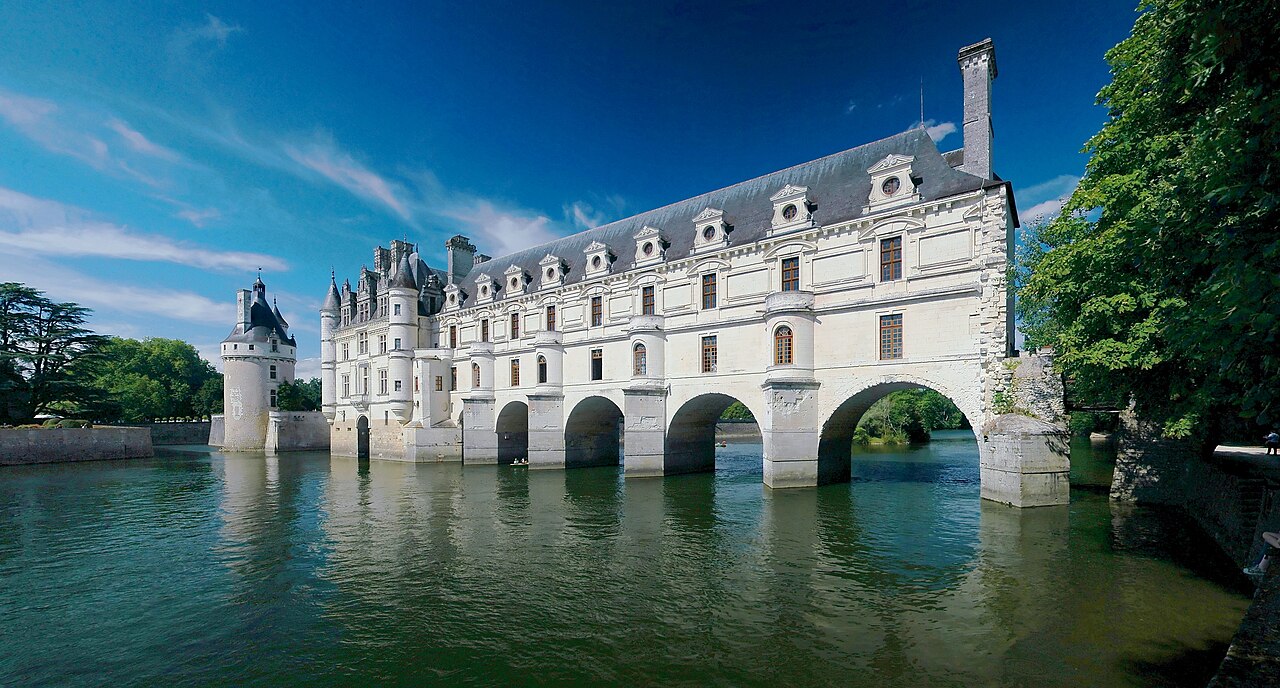
The listed perimeter concentrates an unrivalled density of masterpieces. Among the châteaux you find Chambord, Blois, Chaumont-sur-Loire, Amboise, nearby Chenonceau, but also Sully-sur-Loire, which marks the eastern limit of the listing. Among the towns, Orléans, Blois, Tours and Saumur carry a remarkable urban heritage. To these are added the emblematic gardens, such as those of Villandry or Chaumont, and whole towns of preserved character. Not all are "listed" individually: it is their setting within the Loire landscape that grounds the value of the ensemble. From a central base such as Meung-sur-Loire, most of these major sites lie within an hour's drive, which lets you take in, over a few days, a representative panorama of what UNESCO set out to distinguish in all its richness.
The Loire, the last great wild river
At the heart of this listed landscape flows a central player: the Loire itself, often described as the last great wild river in Europe. Undammed along most of its course, it keeps a rare natural dynamic: shifting sandbanks, fleeting islands, levels that rise and fall with the seasons. This freedom of the river shelters an exceptional biodiversity — terns, ospreys, beavers, herons — protected by nature reserves. The river is not a frozen backdrop but a living organism, changing from one month to the next. It is also the river that shaped everything: the levees built to guard against it, the ports from which the wines set off, the towns born of its trade. To contemplate the Loire at sunset from a sandbank is to see with your own eyes what justifies the listing far more than any carved stone.
The Loire art of living
The heritage of the Loire Valley is not only mineral: it is also gourmet, wine-growing and joyful. The Loire art of living is the third vineyard of France — Sancerre, Vouvray, Chinon — and its tastings in cellars dug into the heart of the tuffeau; it is the five AOP goat cheeses of the valley; it is the colourful markets, the riverside guinguettes in summer, the heirloom vegetables of the Villandry kitchen garden. It is a sweetness of living made of slowness, of local produce and of conviviality along the river. This way of life is an integral part of what UNESCO calls a "living landscape": a territory still inhabited, cultivated and celebrated by its people. By staying in a town like Meung-sur-Loire, you do not merely visit the heritage, you live it from within, at the Sunday market as on the evening terrace.
Understanding the label to visit better
Grasping the logic of the listing transforms the way you travel. Rather than rushing from one château to the next as you tick off a list, you learn to read the landscape: why a particular town took root at a bend, how the levees protect the crops, what the alignment of vines on a slope tells you. You take the time for a walk along the river, a stop in a listed village, a tasting with a wine-grower. The label invites you to slow down and connect things, rather than consume them in isolation. It is an invitation to curiosity: to watch the light on the tuffeau, to spot an osprey, to understand the river's place in a town's history. Visiting the Loire Valley with this reading in mind is to move from monument tourism to the discovery of a coherent, profound territory.
Making the most of it from Meung-sur-Loire
To explore this vast listed landscape, a central base is essential, and Meung-sur-Loire is ideally placed within the very heart of the UNESCO perimeter, between Orléans and Blois. From there, you radiate towards the major châteaux — Chambord and Blois under 45 minutes away, Chaumont and Amboise a little further west — as well as towards the markers of the wild river and the listed villages. The nearby Loire banks, at Beaugency ten minutes away, give access to the river itself, to its sandbanks and its birds. The Sunday market, the region's cellars and the summer guinguettes round off the immersion in the Loire art of living. La Maison du Château, a whole house for eight guests a ten-minute walk from the station, offers the comfort of a real home at the heart of this exceptional territory, perfect for exploring it unhurried over several days.
Seeing the Loire Valley differently
After this overview, one idea remains: the Loire Valley deserves more than an assembly-line tour of châteaux. It is a whole landscape, living and inhabited, that UNESCO recognised for the harmonious meeting of a river, a heritage and an art of living. To grasp its spirit, grant yourself evening light on the tuffeau, a walk on a sandbank, a tasting with a wine-grower, a village market. Mix the great châteaux and the quieter detours, the built and the river, the stone and the table. You will leave with far more than photographs of monuments: with the feeling of having understood a territory and the sweetness of living that has animated it for centuries. That is what it means to savour a living World Heritage, and that is what the Loire offers anyone who takes the time to look at it.
Listed as UNESCO World Heritage since 2000, the Loire Valley is a living cultural landscape where the river, the châteaux and the art of living answer one another from Chalonnes to Sully-sur-Loire. Understanding it as a whole, rather than as a list of monuments, changes everything. From La Maison du Château at Meung-sur-Loire, at the heart of the listed perimeter, you can explore and savour it unhurried.