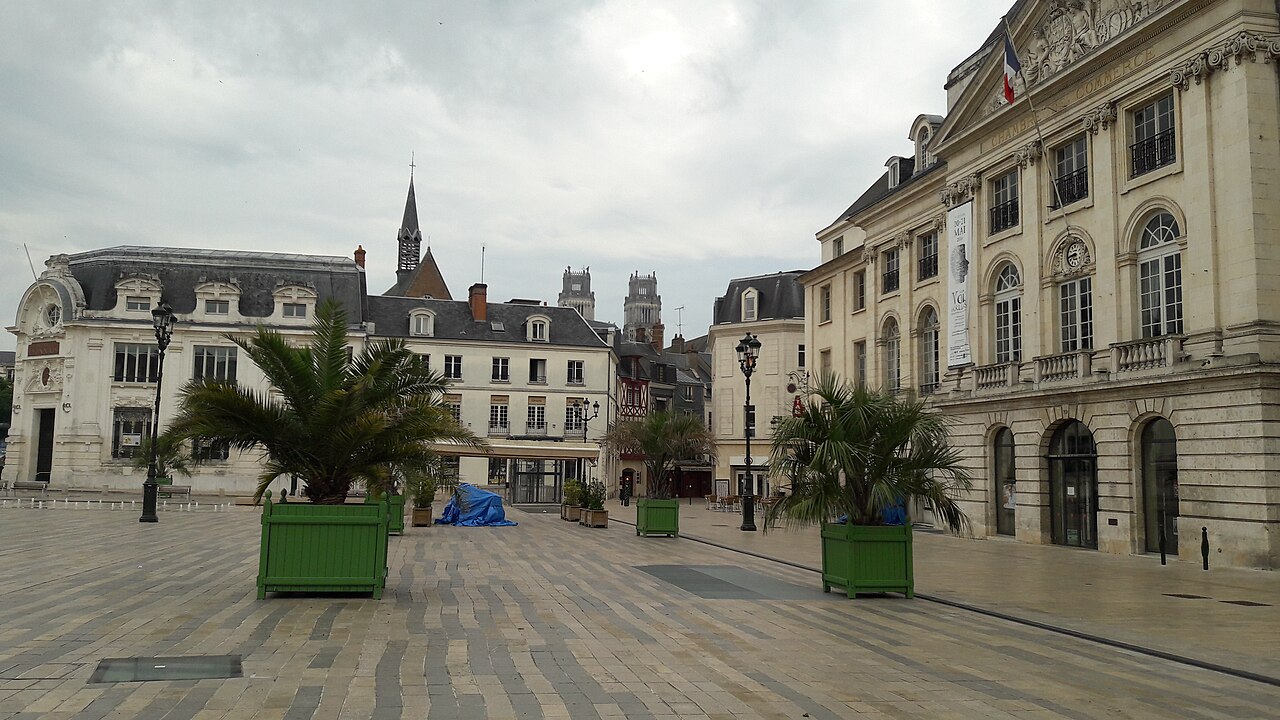
Orléans, the discreet gourmet capital of the Loire Valley
In the shadow of its famous châteaux, the Loiret cultivates a singular food heritage shaped by its position as a river and trading crossroads. For centuries Orléans was a major port on the Loire and the terminus for wines coming down from Burgundy: from this trade was born its legendary vinegar. The Gâtinais, to the east, is a land of honey and saffron; the valley to the west, an orchard. Andouille, Sologne game, candied fruits and sweets complete the picture. Only 25 minutes from Meung-sur-Loire, Orléans is the easiest gourmet outing of the stay, ideal for a morning market followed by lunch in town and a little shopping to take home.
Orléans vinegar, aged the old way
This is the city's emblematic product, heir to a centuries-old vinegar-making tradition. In the Middle Ages, wines that turned during their transit through the port of Orléans were turned into vinegar by a guild of master vinegar-makers, documented from the 15th century. The so-called "Orléans method" relies on a slow acetic fermentation, at room temperature, in oak barrels, without heating or acceleration. This slowness — several weeks — preserves the aromas and gives a fine, complex, gently mellow vinegar, a world away from industrial production. A historic house keeps this know-how alive and can be visited. Taking home a bottle of aged wine vinegar or a flavoured vinegar means bringing five centuries of Orléans history into your kitchen.
Cotignac, the quince paste of kings
Cotignac d'Orléans is a refined confection: a translucent quince jelly, amber and fragrant, traditionally presented in a small round spruce box. Its reputation is royal — it is said to have been offered to Joan of Arc on her arrival in Orléans in 1429, and it long featured among the gifts presented to passing sovereigns. Its artisanal making, from quince juice slowly cooked with sugar, gives a delicate paste, at once firm and melting, with an inimitable floral taste. It is eaten as it is, at the end of a meal with a coffee, or alongside a cheese. A few Orléans confectioners keep the tradition alive: it is the smart, typical sweet souvenir par excellence.
The Olivet pear and fruit liqueurs
At Olivet, the southern suburb of Orléans nestled on the banks of the Loiret, a celebrated speciality was born: the Olivet pear, a Williams pear eau-de-vie long distilled by the local cooperative and award-winning over the years. This craft is the legacy of the pear orchards of the Loiret valley, once very extensive. Olivet and its surroundings more broadly cultivate an art of eaux-de-vie and fruit liqueurs, along with other local treats. It is the kind of speciality you will not find in a supermarket and that always surprises at the tasting. A stop at the producer or a wine merchant in Olivet is the perfect way to round off a gourmet discovery of the Orléans country.
Gâtinais honey and saffron
East of Orléans stretches the Gâtinais, long nicknamed the "land of honey" for the quality of its production. Gâtinais honey, pale and delicately scented by the sainfoin and lucerne flora of the plains, once enjoyed a national reputation. The beekeeping tradition remains alive there, and several producers offer honeys, gingerbreads and mead. The Gâtinais was also, from the Middle Ages to the 19th century, a great land of saffron — "red gold" — whose cultivation is being revived today by a few passionate growers. Honey, gingerbread and a pinch of saffron make an original trio of souvenirs. At the Loiret markets and in Orléans, these products are easily found, often sold by the producers themselves.
Andouille and Sologne game
On the savoury side, the Loiret is not lacking in character. Andouille de Jargeau, named after the small Loiret town that made it its speciality, is eaten as charcuterie, smoked and full-flavoured, on a slice of country bread; it stands out for its high proportion of lean pork, and a local brotherhood celebrates its craft every year. But it is above all the proximity of the Sologne, immediately to the south, that marks the local cooking: a hunting land par excellence, it supplies feathered and furred game, in the spotlight on menus in autumn, along with remarkable terrines and pâtés en croûte. The charcutiers and traiteurs of Orléans work these products seriously. For anyone wanting a savoury basket that is typically of the Loire, andouille, rillettes and game terrines make a fine selection to take home or to enjoy on the spot.
Where to buy: Les Halles Châtelet and the markets
To stock up on specialities in one place, head for Les Halles Châtelet, the covered market of Orléans, open all week except Monday. It is the city's gourmet institution: cheesemongers, charcutiers, greengrocers, but also confectioners and fine grocers where you can find cotignac, vinegar, honeys and candied fruits. The atmosphere is lively and urban, perfect for a quick lunch. Beyond that, the open-air markets of Orléans and the Sunday-morning market in Meung-sur-Loire, 25 minutes away, let you buy direct from the Loiret producers. Ask for advice and taste: the stallholders are proud of their products and delighted to explain what sets a true Orléans vinegar or an artisanal cotignac apart.
A gourmet day in Orléans from Meung
With Orléans only 25 minutes from La Maison du Château, it makes an easy half-day or day out. My ideal programme: arrive mid-morning, stroll through the restored medieval centre around Sainte-Croix cathedral and the house of Joan of Arc, then head for Les Halles Châtelet for shopping and lunch. In the afternoon, push on to Olivet for the banks of the Loiret and its sweets, or visit a vinegar house. Return to Meung-sur-Loire with a basket of vinegar, cotignac, Gâtinais honey and a game terrine: enough to put together a terroir aperitif on the terrace, extending the discovery once you are back.
Orléans and the Loiret prove that you can be neighbour to the greatest châteaux and keep your own gourmet treasures. At 25 minutes from La Maison du Château in Meung-sur-Loire, vinegar, cotignac and Gâtinais honeys make the finest edible souvenirs of the stay.