Loire reds unjustly overlooked
People instinctively associate the Loire with whites, Sancerre or Vouvray, and forget its reds. It is a mistake I love to correct with my guests. Around Chinon and Bourgueil, about 1h20 from Meung-sur-Loire, cabernet franc yields red wines of remarkable finesse, still relatively under the radar and so often at very reasonable prices. These wines have a personality all their own: neither the power of southern reds nor the opulence of certain grand crus, but a fresh, fruity, sometimes spicy elegance that makes them ideal companions at the table. They go just as well with simple cooking as with a more refined meal. For anyone wishing to leave the beaten track and discover wines of character without breaking the bank, these Loire appellations are a treasure trove. They richly deserve a dedicated day within a château stay.
Cabernet franc, the king grape of Touraine
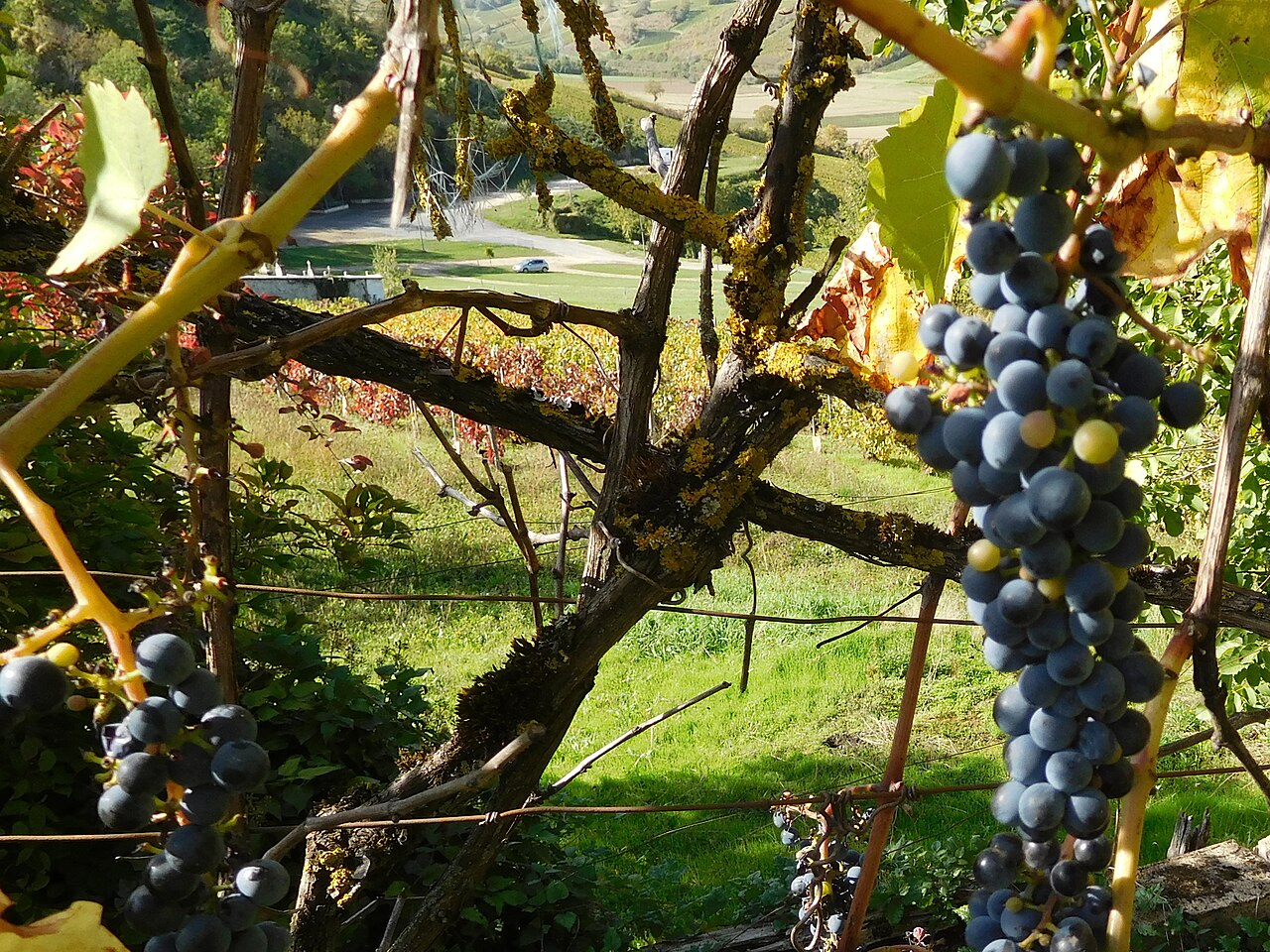
To understand these wines, you need to know their single red grape: cabernet franc, often called "breton" here by local tradition. It is an elegant rather than powerful grape, giving wines with a ruby colour, fine tannins and lovely freshness. Its typical aromas evoke red fruit, raspberry and redcurrant, sometimes a note of green pepper or violet, and with age deeper notes of leather and undergrowth. Cabernet franc expresses itself differently according to the soil: on the gravel terraces near the river, it gives light, fruity wines to drink young; on the slopes of tuffeau and clay, it gains in structure and ageing potential. This sensitivity to terroir explains the diversity of styles from one estate to another, and all the interest of comparing several cuvées during a visit.
Chinon, finesse and history
Chinon is probably the best known of the three appellations, and the most steeped in history, in this town dominated by its royal fortress where Joan of Arc met the dauphin. The wines of Chinon, mostly red, cover a fine range of styles. The gravel cuvées, supple and fruity, are drunk young and fresh, sometimes even lightly chilled in summer. The slope cuvées, from tuffeau, offer more body, tannin and ageing potential, gaining in complexity after a few years in the cellar. A little white is also made there, from chenin, and rosé, fresh and generous. To visit Chinon is to combine the tasting with exceptional heritage: I always advise pairing it with a discovery of the fortress, which dominates the town and the valley of the Vienne, for a full day uniting wine and history.
Bourgueil and Saint-Nicolas-de-Bourgueil
On the other bank, Bourgueil and its neighbour Saint-Nicolas-de-Bourgueil carry on the cabernet franc adventure with their own character. Bourgueil produces reds that are often a little more structured and full-bodied, capable of fine ageing, especially in sun-blessed vintages and on tuffeau soils. Saint-Nicolas-de-Bourgueil, a distinct and smaller appellation, is known for wines that are generally finer and fruitier, more immediately approachable, charming for their freshness. The distinction between the two is subtle and delights enthusiasts who love to compare. Both appellations share the same generosity on price: you will find excellent wines there at very gentle prices. My advice for pressed guests: if Chinon is beyond reach for want of time, Bourgueil offers an experience just as rewarding and winemakers just as welcoming, over comparable distances from Meung-sur-Loire.
The troglodyte cellars, a visit apart
One of the great pleasures of the region lies in its troglodyte cellars, dug into the tuffeau. This soft stone, quarried for centuries to build the Loire châteaux, has left immense underground galleries that winemakers now use to age and store their wines. To descend into them is an experience in itself: a cool, constant temperature all year round, ideal humidity, mineral silence, and sometimes kilometres of corridors where the bottles rest. Many estates in Chinon and Bourgueil offer the tasting directly in these cellars, which adds an almost theatrical dimension to the discovery. I find that no tasting in a room can replace the emotion of tasting a cabernet franc in the cool gloom of a troglodyte cellar. Remember to bring a light jacket, even in high summer: underground it is cool, and the visit can last a good while.
Gourmet pairings: rillettes and cheeses
The cabernet franc reds are wines of gastronomy that pair wonderfully with Loire specialities. The regional pairing par excellence remains the charcuterie of Tours, rillettes and rillons foremost: the fresh fruit of the wine cuts ideally through the fat and richness of these pork preparations. On a cheese board, cabernet franc also works wonders, notably with the region's goat's cheeses, whose acidity converses with the fruit of the wine. The more structured cuvées of Chinon or Bourgueil readily accompany red meats, a Sologne game dish in season, or a slow-cooked stew. The lighter cuvées, slightly chilled, are even enjoyed as an aperitif or with summer grills. This versatility at the table is one of the great strengths of these wines, and one of the reasons I recommend them so often to my food-loving guests.
Estates to visit and ageing the wines
The Chinon, Bourgueil and Saint-Nicolas-de-Bourgueil appellations have many family estates that gladly welcome visitors for a tasting, often free or for a very modest fee. My host's advice is always the same: telephone a day or two ahead to confirm opening hours, especially out of season, and ask to taste both a young gravel cuvée and an ageing slope cuvée, to grasp the full range. As for ageing, precisely, the light wines are drunk within two to three years, on their fruit, while the fine tuffeau cuvées can age five to ten years, or longer in the great vintages, developing complex aromas. If you buy a few bottles, ask the winemaker for their ageing advice on each. Then store them lying down, cool and away from light, until you reopen them at home in memory of the Loire Valley.
Planning your red-wine day
From Meung-sur-Loire, a day devoted to the Loire reds calls for a little driving, about 1h20 to the Chinon and Bourgueil area, but it is well worth it. I advise setting off in the morning, visiting a first cellar towards late morning, then lunching on the spot on a plate of Tours charcuterie and a glass of the local wine. In the afternoon, a second cellar and, if time allows, a discovery of the royal fortress of Chinon or even the nearby Abbey of Fontevraud make for a perfect day uniting wine, gastronomy and heritage. Limit yourself to two tastings, nominate a sober driver, and savour without excess. Back at La Maison du Château, 1h30 from Paris, you will extend the pleasure on the terrace by opening one of the bottles you brought home. It is, to my mind, one of the finest epicurean days the Loire Valley can offer.
Chinon, Bourgueil and Saint-Nicolas-de-Bourgueil are proof that the Loire is not just its whites: its cabernet franc reds, fine, fruity and affordable, deserve all your attention. Between troglodyte cellars, Tours charcuterie and fortresses, the day is unforgettable. From La Maison du Château in Meung-sur-Loire, the vineyard is about 1h20 away, and Paris 1h30.