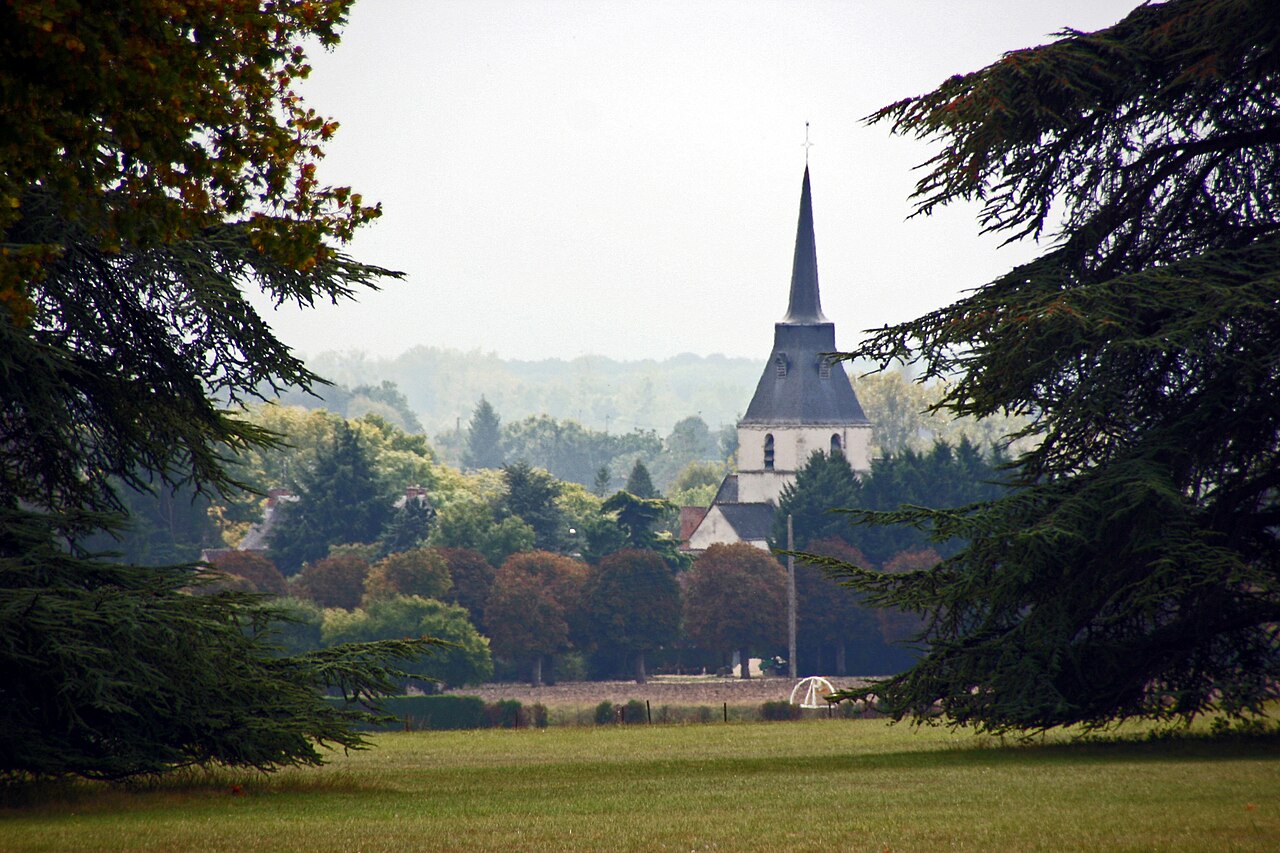
Talcy, the little-known château forty minutes from Meung-sur-Loire
Everyone knows Chambord and Chenonceau; almost no one talks about Talcy. That is precisely what makes its charm. Standing on the edge of the Beauce plain, just forty minutes from Meung-sur-Loire, this intimate château has the rare quality of having crossed the centuries without being spoilt. You do not come here for the dazzle of the great royal residences, but for the feeling of a place that has stayed true, with its furniture, its hangings and its atmosphere of a lived-in house. For my travellers seeking to escape the crowds and discover another Loire, more secret and gentler, Talcy is one of my favourite recommendations. A short visit, but a deeply endearing one.
Ronsard, Cassandre and the birth of a great love poem
Talcy is not only a pretty château: it is a place of literature. It was here that the young Pierre de Ronsard met Cassandre Salviati, the owner's daughter, who inspired him to write one of the most famous collections in French poetry. The muse of so many verses lived within these walls, and to walk through the rooms of Talcy is to tread in the footsteps of that meeting turned myth. Later, the château was also linked to Agrippa d'Aubigné, another great name of letters and of the Wars of Religion. Few homes of this size can claim such literary density. For anyone who loves poetry, Talcy offers an added emotion, almost intimate, that the more monumental châteaux do not provide.
A preserved interior, witness to life of old
What strikes you at Talcy is the authenticity of its interiors. Unlike many reconstructed châteaux, you discover here old furniture and décor that have genuinely crossed time, giving a true idea of the daily life of a well-to-do family over the centuries. The rooms follow one another on a human scale, without crushing pomp, with that extra soul peculiar to long-inhabited houses. It is a visit that speaks to the heart as much as to history. You easily picture the conversations, the fires in the hearths, the life that once flowed there. This preserved intimacy has become rare, and it is one of the great riches, discreet but real, of the Château de Talcy.
The dovecote and its ingenious mechanism
Among the treasures of Talcy stands its dovecote, one of the most remarkable in the region. This round building, once a symbol of seigneurial power, keeps its hundreds of nesting holes — the niches meant for the pigeons — and, above all, its original revolving ladder, which allowed access to each niche. This ancient mechanism, still in place, bears witness to a fascinating rural know-how and greatly pleases visitors, young and old. The dovecote is a reminder that a château was not only a residence of display, but also the heart of an organised agricultural estate. At Talcy, this dimension of life of old is particularly legible, which adds to the interest of a visit already rich in historical and literary emotion.
The wine press and the conservation orchard
Talcy was for a long time a living agricultural estate, and it keeps fine evidence of this. Its great old wine press recalls the importance of the vine and of grape juice in the economy of former times, while its conservation orchard keeps alive old varieties of fruit, some of them forgotten. To walk through these spaces is to understand how a Loire estate truly lived, beyond the rooms of display. In autumn, the orchard takes on particular colours and atmosphere. This attention paid to living heritage — fruit, vine, rural life — makes Talcy far more than a simple château visit: a complete immersion in a way of life. It is this added meaning that makes the stop so rewarding for the curious.
Talcy in autumn and off-season, an asset
Where the great châteaux can disappoint in winter with their sleeping gardens, Talcy keeps all its charm off-season. As its interest lies chiefly in its interiors, its history and its farm buildings, the visit remains fully satisfying even in November, under soft light and in almost total calm. It is in fact one of the outings I gladly recommend to my late-season travellers, when you are after an authentic site without the summer crowds. Do check the opening times and days before setting off, however, as these may vary with the season. At forty minutes from the house, Talcy is the ideal escape for a quiet half-day right in the heart of the Loire autumn.
Combining Talcy with Beaugency, Blois and the Beauce
The closeness of Talcy makes it easy to fold into a wider day. At forty minutes from Meung-sur-Loire, the château stands at the gates of the Beauce and not far from the Loire valley. You can readily pair it with the pretty medieval town of Beaugency, very near, with a stop at Blois, or with a discovery of the wide arable landscapes of the Beauce. Lovers of calm will see in it a perfect morning before lunch in town. This flexibility makes Talcy an excellent complement to the must-sees: you add it to an itinerary without much of a detour, to vary the pleasures between majestic château and intimate home, between Loire and Beauce.
Practical tips for visiting Talcy
Allow around forty minutes of driving from La Maison du Château, which makes Talcy one of the closest châteaux to Meung-sur-Loire. The visit, more compact than that of the great sites, usually takes one to two hours: ideal for a half-day, to be paired with another stop. Ask about the opening times and visiting conditions, as the château is run within a heritage framework. Good shoes are enough. Talcy lends itself particularly well to a quiet discovery, without haste: take the time to read the panels, to listen to the stories and to savour the calm. It is a visit you leave soothed, with the sense of having touched a more secret Loire.
A preserved home, the cradle of a great poetic love and a moving witness to life of old, the Château de Talcy is one of those secrets I love to share with my travellers. At just forty minutes from La Maison du Château in Meung-sur-Loire, it is the authentic escape par excellence, far from the crowds, in the footsteps of Ronsard and his Cassandre.